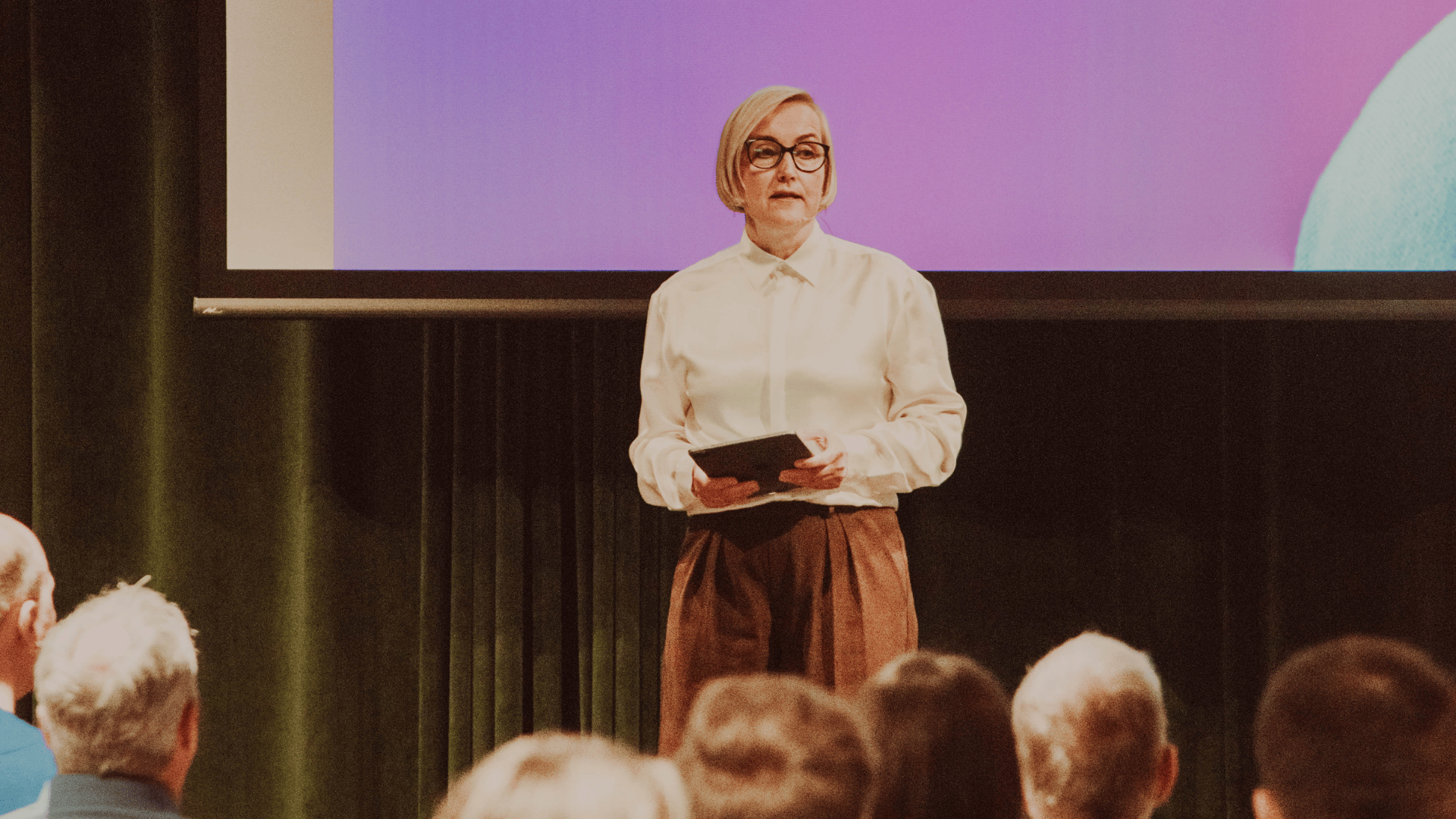
Kristina Kallas: Why Estonia is gambling on AI in schools
Artikkel ilmus digilehes Politico. Originaal artikli leiad siit.
Education and Research Minister Kristina Kallas is leading a pioneering effort to train students to use artificial intelligence.
Estonia is betting that the future of education won’t be built by keeping artificial intelligence out of classrooms — but by putting it at the center of them.
Rather than trying to stop students, Estonian Education and Research Minister Kristina Kallas told POLITICO that schools should train them to use generative AI to their educational advantage.
“If you regulate AI out of school, you’re risking significant cognitive decline because the students will be using it anyway,” Kallas said.
That philosophy underpins one of Europe’s most ambitious national experiments in AI-assisted education: A partnership between Tallinn and Sam Altman’s OpenAI to roll out a customized educational artificial intelligence platform across Estonia’s upper secondary schools.
Estonia is an eager AI adopter. According to Eurostat, 23.4 percent of the country’s companies incorporated artificial intelligence in 2025, above the EU average of 20 percent. Tallinn has also not been shy about betting on emerging technologies: it is the birthplace of the once-mighty telecoms app Skype, and home to current tech champion companies like the mobility and food delivery app Bolt and Veriff, the global identity verification service.
Around half of Estonia’s 20,000 upper secondary students are already using the new platform, with the remainder expected to join this summer, in what Kallas described as an effort to rethink teaching. Vocational schools are due to follow during the next academic year.
The program marks a sharp departure from the approach taken elsewhere in Europe, where there’s caution in adopting artificial intelligence and the focus has largely been on detecting AI-assisted cheating.
“That is the wrong fight,” said Kallas, who also teaches at the University of Tartu. She redesigned her own university assignments to integrate the technology, after realizing students were outsourcing traditional coursework to generative AI.
“The challenge is not how to keep AI out,” she said. “The challenge is how to put AI into the learning process so that it accelerates and enhances cognitive growth rather than replacing thinking.”
Kallas compared artificial intelligence to earlier disruptive technologies that initially provoked panic before becoming accepted classroom tools. “We should think of it like a calculator,” she said, while cautioning that its value depends on how and when it is used.
The minister stressed that AI should not be introduced too early in childhood. Students must first build foundational factual knowledge, literacy, numeracy and social-emotional skills before AI can become a productive aid, she argued.
“If you don’t know your basic structure of knowledge, then you can’t develop critical thinking,” she said. “You have to know when the Second World War started — 1939 — because some things you just have to know by heart.”
Education ministers from the 27 EU countries are on Tuesday expected to adopt a position on the use of the technology, calling for “an ethical, safe and human-centred approach to AI in education” that includes a focus on digital skills and AI literacy.
The folly of prohibition
Estonia’s initiative is also doubling as a research project into how artificial intelligence affects learning.
Under the agreement with OpenAI, Kallas said student data entered into the education platform remains under Estonian control and cannot be used to train the company’s broader models.
Researchers will instead analyze anonymized usage patterns to study how students engage with artificial intelligence — what they ask, how long they interact and whether they use it for deep discussion or superficial fact-checking. The findings will be published as part of a broader scientific study.
For OpenAI, the deal with Estonia is part of a push to secure government agreements to boost the adoption of AI in schools. Both Greece and Slovakia have teamed up with the ChatGPT-maker to bring customized generative intelligence chatbots to the classroom.
Former U.K. Chancellor of the Exchequer George Osborne is spearheading OpenAI’s direct dealings with governments. When announcing their deal, Slovak Education Minister Tomáš Drucker said the move would offer the opportunity to verify “how artificial intelligence can be meaningfully used” to educate new teachers.
The rollout comes as Europe debates how to curb excessive screen time among minors, but Kallas argues policymakers are often focused on the wrong metric.
“It’s not about the amount of screen time,” she said. “It’s about the purpose, the pedagogical strategy behind the screen time.”
She said earlier digitalization efforts often failed because schools simply moved textbooks and worksheets onto tablets without rethinking teaching methods. Instead, she advocates a blended model in which students continue to use handwriting and note-taking for memory formation, while digital tools are used for testing, feedback and guided AI-assisted learning.
Other European governments are watching closely. Kallas said education ministers across the bloc have shown strong interest in Estonia’s model, which stands out as many countries move in the opposite direction by restricting smartphones in schools or debating online age checks for social media.
Tallinn remains skeptical of broad technology bans, and Kallas argued such measures tend to provoke resistance rather than compliance.
Recalling her upbringing under Soviet rule, she said “everything was banned from us, so most of our days were spent figuring out how to avoid those bans.”
May 11, 2026 11:16 am CET
By Aitor Hernández-Morales
Pieter Haeck contributed to this report.